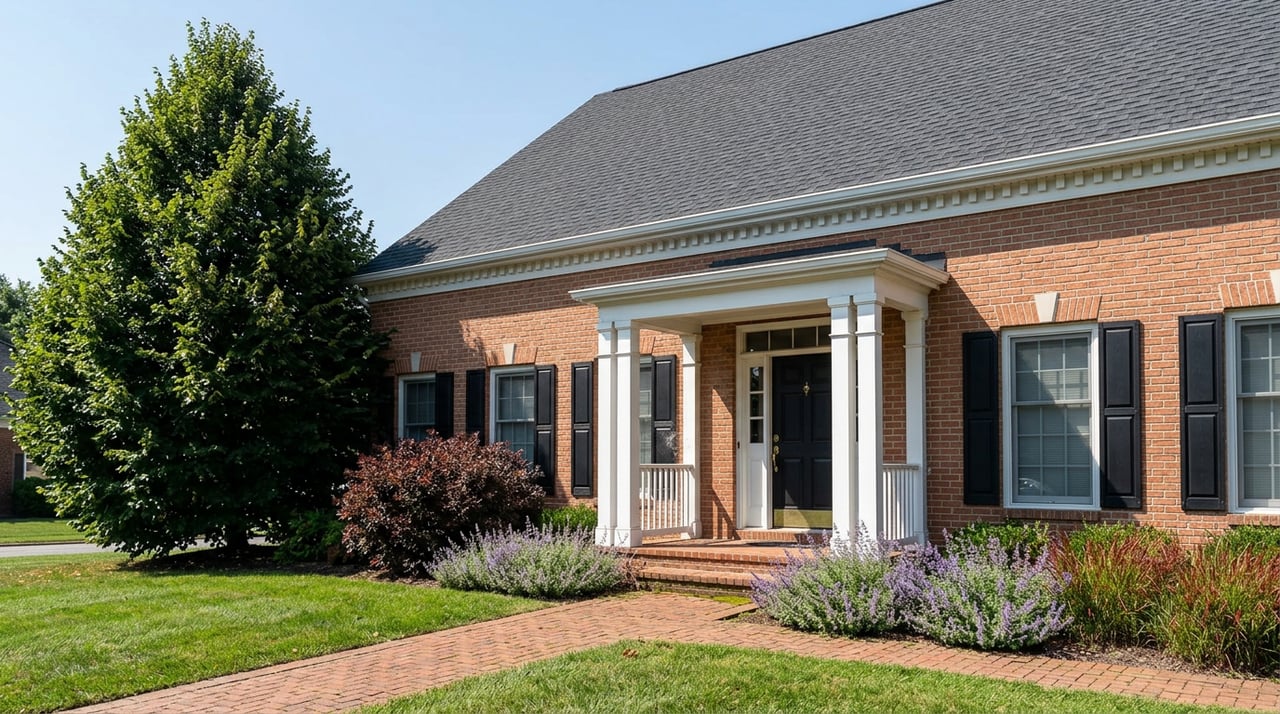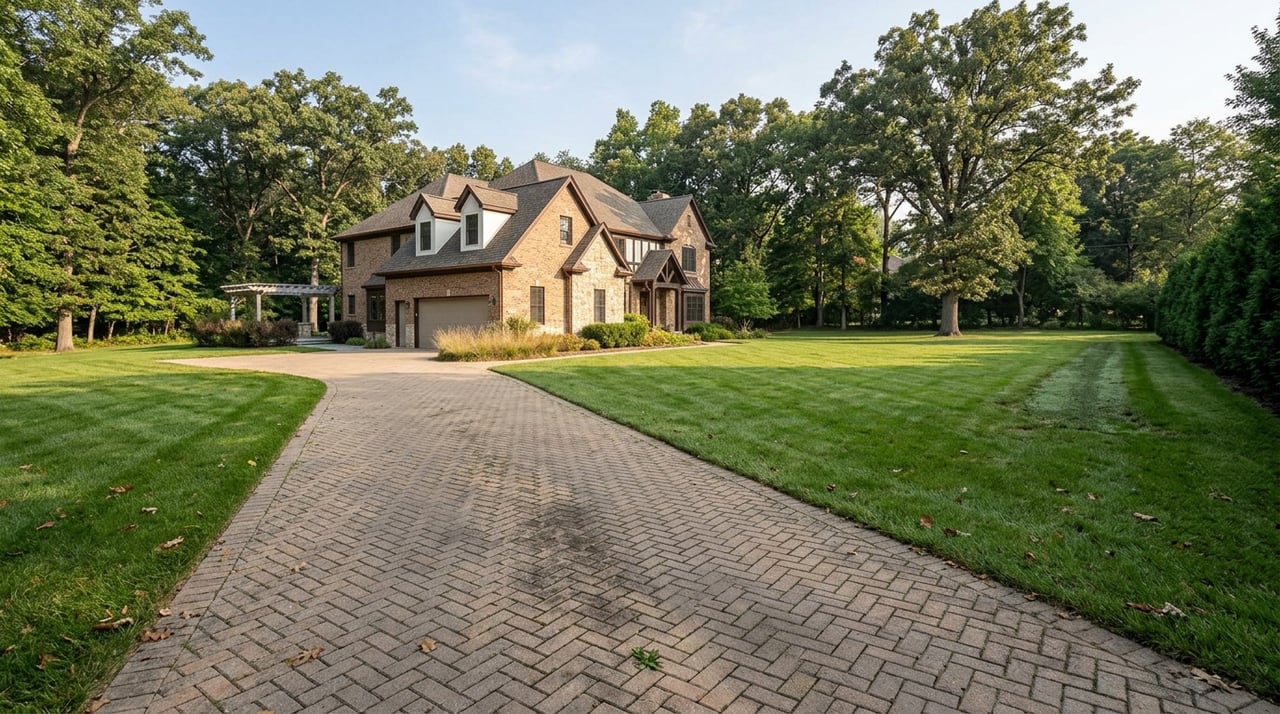
Ask ten people what makes Hawthorn Woods worth a look and most will land on the same word: space. An acre of lawn, a well that's yours alone, distance between porch lights. That reputation is real and it goes back to the village's founding in 1958, when Hawthorn Woods set out to be the kind of place where a single-family home on close to an acre was the rule, not the exception.
But if you're shopping the village today, that reputation only describes part of what's for sale. A meaningful share of current Hawthorn Woods inventory sits inside a gated, HOA-governed golf community built decades after that founding vision, on lots that are a fraction of an acre, with monthly dues and a documented property tax bill that runs well above what the acre-lot side of town typically carries. Both wear the Hawthorn Woods name. Both show up under the same median price on a portal search. They are not the same purchase.
The Acre the Village Was Built On
The village's own 2004 Comprehensive Plan is unusually direct about this. It notes that since incorporation, the primary category of development in Hawthorn Woods has been single-family homes on lots of roughly one acre, and that residents were drawn to the village by its "rural character and low density development pattern." That plan is public record, and it's worth reading if you're weighing a purchase here, because it explains why so many Hawthorn Woods addresses still run on private wells and septic systems rather than municipal water and sewer. When a village's founding logic is built around low density, it doesn't extend utility infrastructure the way a denser suburb does. The acre lot and the private well aren't two separate facts about a property. They're the same decision, made in 1958 and reaffirmed on paper as recently as 2004.
That matters at closing, not just at the curb. A well and septic system are the buyer's to inspect, maintain, and eventually replace, and those costs live outside the tidy math of a mortgage payment. If you're comparing a Hawthorn Woods listing to a home in a suburb with municipal service, the sticker price alone won't tell you which one comes with that responsibility.
The Community That Broke From the Pattern
Then there's Hawthorn Woods Country Club. Built by Toll Brothers starting in 2004 around an 18-hole golf course designed by Arnold Palmer, the community brought several hundred homes onto lots that look nothing like the village's founding standard. Home sizes there range from about 1,668 to 9,895 square feet, which tells you the community itself spans everything from smaller attached product to large custom estates, but the lots underneath them are a different animal entirely from the one-acre norm. Some sections carry HOA dues as low as $30 a month. Others, tied to fuller amenity access, run as high as $830 a month. One representative listing showed a $402 monthly social fee layered with a $1,956 annual common-area assessment and a one-time $2,000 buyer fee, on top of the base dues. Subdivision data compiled across HWCC's recent sales also shows an average annual property tax bill north of $13,000, a figure that reflects both the amenity package and the newer construction assessed against it.
None of that makes Hawthorn Woods Country Club a lesser choice. Golf access, a gated community, and shared amenities are exactly what a lot of move-up buyers are looking for, and the pace of activity backs that up. But it is a fundamentally different carrying-cost structure than an acre-lot home with a well pump and a septic tank as its only ongoing utility obligations. Buyers who assume "Hawthorn Woods" means one thing are pricing the wrong risks into their offer.
| Original acre-lot Hawthorn Woods | Hawthorn Woods Country Club | |
|---|---|---|
| Typical lot size | Approximately one acre | A fraction of an acre |
| Water and sewer | Private well and septic | Municipal or community-managed service |
| HOA dues | Generally none | Roughly $30 to $830 per month depending on section |
| Approximate annual property tax | Varies by parcel and assessment | Averages above $13,000 per recent subdivision data |
| Built | Since 1958, per village planning documents | Since 2004, by Toll Brothers |
What the Median Actually Blends
This is why a single number does more hiding than helping here. Village-wide, Redfin's May 2026 data put the median sale price across all home types at $744,549, up 8.6% year over year. Movoto's July 2026 figures showed the village listing to buy at a median of $852,000, or $246 per square foot. Inside Hawthorn Woods Country Club specifically, that same July 2026 window showed a median list price of $849,000 at $261 per square foot, with homes spending a median of 44 days on market, a 26% drop from the prior year.
Put those two data sets next to each other and a pattern shows up. The HWCC-specific median tracks closely with the village-wide number, which makes sense given how much of current inventory now sits inside that community. But the price per square foot is meaningfully higher inside HWCC, which is the amenity and lot-density trade showing up in the math. A buyer scanning the village median alone has no way to tell whether they're pricing land or pricing a golf membership and a smaller footprint. The number is accurate. It just isn't specific enough to shop by.
The Name That Isn't Actually Hawthorn Woods
There's a second trap worth flagging, and it's a naming one. Wynstone, the gated golf community frequently mentioned in the same breath as Hawthorn Woods Country Club, actually sits in neighboring North Barrington, not Hawthorn Woods. It's served by Barrington Community Unit School District 220, a different taxing and school jurisdiction entirely, and its lots run from about 0.3 to just over 3 acres, a much wider range than either side of the Hawthorn Woods split. December 2025 listing data put Wynstone's median price near $1.45 million, close to double the village-wide Hawthorn Woods figures cited above.
None of that makes Wynstone better or worse. It makes it a different municipality with a different tax base and a different set of schools, and buyers who casually group it into "the Hawthorn Woods area" while comparing notes online are comparing two towns as if they were one. If a listing agent, a friend, or a portal search lumps a property in with Hawthorn Woods, confirm the actual municipal boundary before you anchor your budget to it.
Same Village, Different School Lines
Even within Hawthorn Woods proper, subdivision matters more than the village name suggests. Homes in Hawthorn Hills, for instance, fall within Lake Zurich Community Unit School District 95. Homes in Hawthorn Grove fall within the Stevenson High School District at the high school level. This isn't a quality judgment about either district. It's a due-diligence point: two homes with a Hawthorn Woods mailing address, a few streets apart, can feed entirely different school systems. If school assignment factors into your decision at all, verify it by parcel, not by village name.
What to Ask Before You Anchor to a Number
If you're comparing Hawthorn Woods to other north and northwest suburbs, treat the median price as a starting point, not an answer. Before you get attached to a listing, ask which era of village development it belongs to, whether it's on private well and septic or municipal service, what HOA dues and reserve obligations apply if it's inside a governed community, and which specific school and taxing districts serve that parcel rather than the village as a whole. Those four questions will tell you more about your actual monthly cost and daily experience than any single price-per-square-foot figure ever will.
A couple of quick answers, since these come up often:
Does every home in Hawthorn Woods have a well and septic system? No. Homes built to the village's original acre-lot standard typically do, but Hawthorn Woods Country Club and other newer developments generally connect to municipal or community-managed service. Confirm utility type on any specific property rather than assuming based on the general village reputation.
Is Wynstone part of Hawthorn Woods? No. Wynstone is located in North Barrington and served by Barrington CUSD 220. It's often mentioned alongside Hawthorn Woods Country Club because of proximity and similar amenity style, but it sits in a different municipality with different taxes and schools.
If you're weighing a move to Hawthorn Woods, or trying to figure out which side of this split actually fits your budget and your priorities, our team spends a lot of time in these exact subdivisions and can walk you through the parcel-level details a median price will never show you. Browse the full Hawthorn Woods neighborhood guide or head to our buyer resources to start narrowing things down. When you're ready to talk specifics, Let's Connect with Renee Clark Homes.